

In rigid box manufacturing, production efficiency depends not only on machine speed but also on how quickly equipment can adapt to different box designs. An automatic single-channel rigid box machine helps manufacturers manage multiple product specifications through automated box-making operations and convenient mold changes. When production orders involve different dimensions, styles, or packaging requirements, reducing setup time can improve workflow continuity and equipment utilization. Therefore, quick mold change is an important feature for manufacturers seeking greater flexibility without sacrificing consistent production quality.
Why Quick Mold Change Matters in Rigid Box Production
Traditional production setups can require time-consuming adjustments whenever manufacturers switch between box sizes or styles. These delays reduce the time available for actual production, particularly when a factory handles frequent small-batch orders or multiple packaging designs. By simplifying mold replacement and coordinating machine settings, quick mold change helps shorten transitions between jobs. As a result, operators can prepare the next production run more efficiently and reduce unnecessary interruptions.
In addition, faster changeovers make production scheduling more flexible. Manufacturers can organize different orders within a shorter planning window and respond more efficiently to changing customer requirements. However, the actual time saved depends on box specifications, operator familiarity, and the adjustments required for each job. For this reason, quick mold change is most valuable when supported by repeatable setup procedures and clearly defined production parameters.
How Automation Supports Faster Changeovers
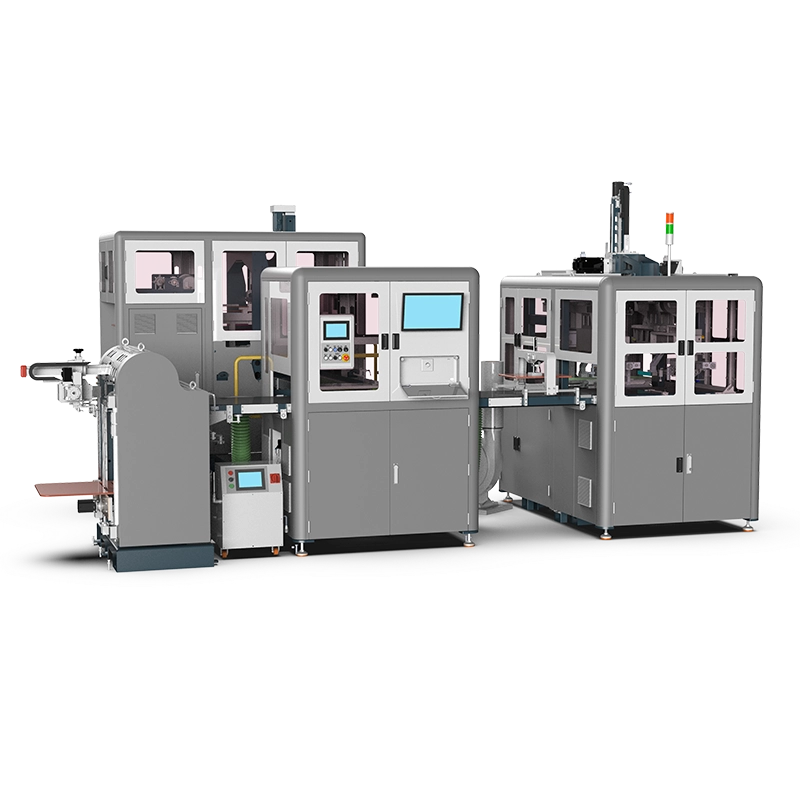
An automatic single-channel rigid box machine combines automated feeding, digital parameter settings, and coordinated machine movements to simplify box production. In the HM-SC series, computer-based digital settings allow operators to configure production parameters, while the wrapper can store up to 300 product formulas. These stored formulas can help operators retrieve settings for repeat orders instead of rebuilding every configuration from the beginning. Consequently, production teams can reduce repetitive setup work when switching between familiar box specifications.
Furthermore, automatic feeding of paper and greyboard helps maintain a more continuous workflow after setup is complete. The intelligent gluing system automatically adjusts glue density and temperature, supporting consistent gluing conditions during production. Meanwhile, synchronized movement between the main slider and pull mold section helps coordinate related machine operations. Together, these functions support a more organized production process, although the final changeover time still depends on the requirements of each job.
Key Features That Improve Production Efficiency
Quick mold change is only one part of an efficient box-making process. Manufacturers also benefit from automation features that reduce manual intervention, support positioning accuracy, and maintain consistent processing conditions. The HM-SC series incorporates several functions designed to support these goals.
- Digital parameter setting: Computer-based settings simplify the adjustment of production parameters for different box specifications.
- Stored product formulas: The wrapper can store up to 300 formulas, helping operators retrieve settings for repeat production jobs.
- Automatic material feeding: Paper and greyboard feeding reduces the need for repeated manual material placement during normal operation.
- Intelligent gluing: Automatic adjustment of glue density and temperature helps maintain suitable gluing conditions.
- Vision-based positioning: The robot vision image positioning system has a specified spotting accuracy of ±0.05 mm, supporting accurate positioning during box-making operations.
- Independent corner-pasting controls: The corner-pasting section features independent man-machine control and a heating system, allowing its operation to be managed as a dedicated process.
These functions address different stages of production, from preparation and positioning to gluing and box forming. When configured appropriately, they can help manufacturers improve process consistency and reduce avoidable setup work.
Comparing Production Factors Before and After Quick Mold Change
The benefits of quick mold change are easier to evaluate when manufacturers consider the entire production workflow rather than machine speed alone. The following table explains how changeover-friendly functions can influence common production tasks.
| Production factor | Conventional changeover challenges | Potential benefit of automated functions |
|---|---|---|
| Parameter adjustment | Repeated manual adjustments may take additional time | Digital settings and stored formulas simplify repeat setups |
| Material preparation | Manual feeding can interrupt workflow | Automatic paper and greyboard feeding supports continuous operation |
| Glue control | Manual adjustment may create inconsistent settings | Intelligent gluing adjusts glue density and temperature |
| Positioning | Manual alignment may require repeated correction | Robot vision positioning supports accurate spotting |
| Process coordination | Separate adjustments may complicate operation | Synchronized slider and pull mold movement supports coordinated motion |
| Order flexibility | Frequent product changes can increase setup workload | Faster, repeatable setup can make mixed-order production easier to manage |
The table highlights potential workflow improvements rather than guaranteed performance figures. To calculate actual savings, manufacturers should compare setup times, production quantities, defect rates, and operator requirements before and after implementing the machine.
The Role of Vision Positioning and Intelligent Control
Accurate positioning is particularly important when producing rigid boxes with defined edges and consistent wrapping requirements. A robot vision positioning box machine uses an image-based positioning system to identify target locations and support accurate material placement. For the HM-SC series, the specified spotting accuracy is ±0.05 mm, providing a measurable reference for evaluating positioning performance. Actual results may vary according to material characteristics, operating conditions, and the specific production setup.
In addition, intelligent control functions help coordinate multiple processes within the same machine. The cam box can participate in motion control as a whole, while the main slider and pull mold section operate synchronously. An intelligent rigid box machine with these coordinated functions can help reduce fragmented adjustments during production. Nevertheless, operators should still verify setup parameters and finished box quality when introducing a new design.
Choosing a High-Speed Rigid Box Machine for Flexible Orders
Production speed is important, but it should be assessed alongside changeover requirements, box compatibility, positioning accuracy, and operating convenience. A high-speed rigid box machine may be suitable for manufacturers with substantial production volumes, while facilities handling frequent design changes may place greater emphasis on flexible setup and stored formulas. The most appropriate configuration depends on the range of box types, material specifications, order quantities, and required output quality.
Before selecting a rigid box making machine, manufacturers should review several practical considerations:
- Box variety: Determine how frequently box dimensions, structures, and styles change between orders.
- Changeover requirements: Identify which molds, parameters, and process settings need adjustment for each product.
- Automation functions: Evaluate whether automatic feeding, intelligent gluing, and vision positioning match the production workflow.
- Quality criteria: Confirm the required positioning accuracy, box dimensions, corner quality, and wrapping consistency.
- Production planning: Compare expected setup time and output across typical orders rather than relying on nominal machine speed alone.
By evaluating these factors together, manufacturers can choose equipment that supports both production efficiency and the flexibility required by their customers.
Improve Box Production with Hongming
Hongming offers the HM-SC series single-channel automatic rigid box machine, including models HM-SC4354, HM-SC6461, HM-SC6471, and HM-SC6481. The series combines quick mold change capability with automatic paper and greyboard feeding, digital parameter settings, intelligent gluing, and robot vision image positioning. In addition, the wrapper’s capacity to store up to 300 product formulas can support repeat orders and reduce repetitive configuration work. These features make the series worth evaluating for manufacturers producing different rigid box styles.
Ultimately, quick mold change creates value when it reduces setup work and helps production teams move between orders in a controlled, repeatable way. When combined with automatic feeding, stored formulas, and coordinated machine movements, it can support a more flexible manufacturing workflow. By reviewing actual box requirements and measuring changeover performance, manufacturers can determine how the HM-SC series fits their production goals and packaging operations.